
A Pacific storm will bring rain and high elevation snow from the Pacific Northwest into the Northern Rockies. A series of storms are expected to move through the Bering Sea bringing strong winds, heavy precipitation, and elevated water levels from the West Coast to northern Alaska. Read More >
2014: Record Coldest Year for Fayetteville, Arkansas
|
2014 is the coldest year at Drake Field, Fayetteville, AR since record keeping began July 14, 1949. The average temperature for 2014 is 55.3°F, edging out the previous record of 55.5°F in 1979 and 1976. Five months during 2014 ranked in the top 10 coldest, with July 2014 the coldest July on record in Fayetteville. 2014 is also the record coldest year at several other locations in Arkansas. The warmest year on record at Drake Field occurred just two years ago in 2012, with an annual average temperature of 60.5°F. This results in a 5.2°F difference between the coldest and warmest years on record. To see how all 65 years in the record book rank, click here. More climate information about Fayetteville, Drake Field can be found here. Click on the images below for a larger view in a new window. |
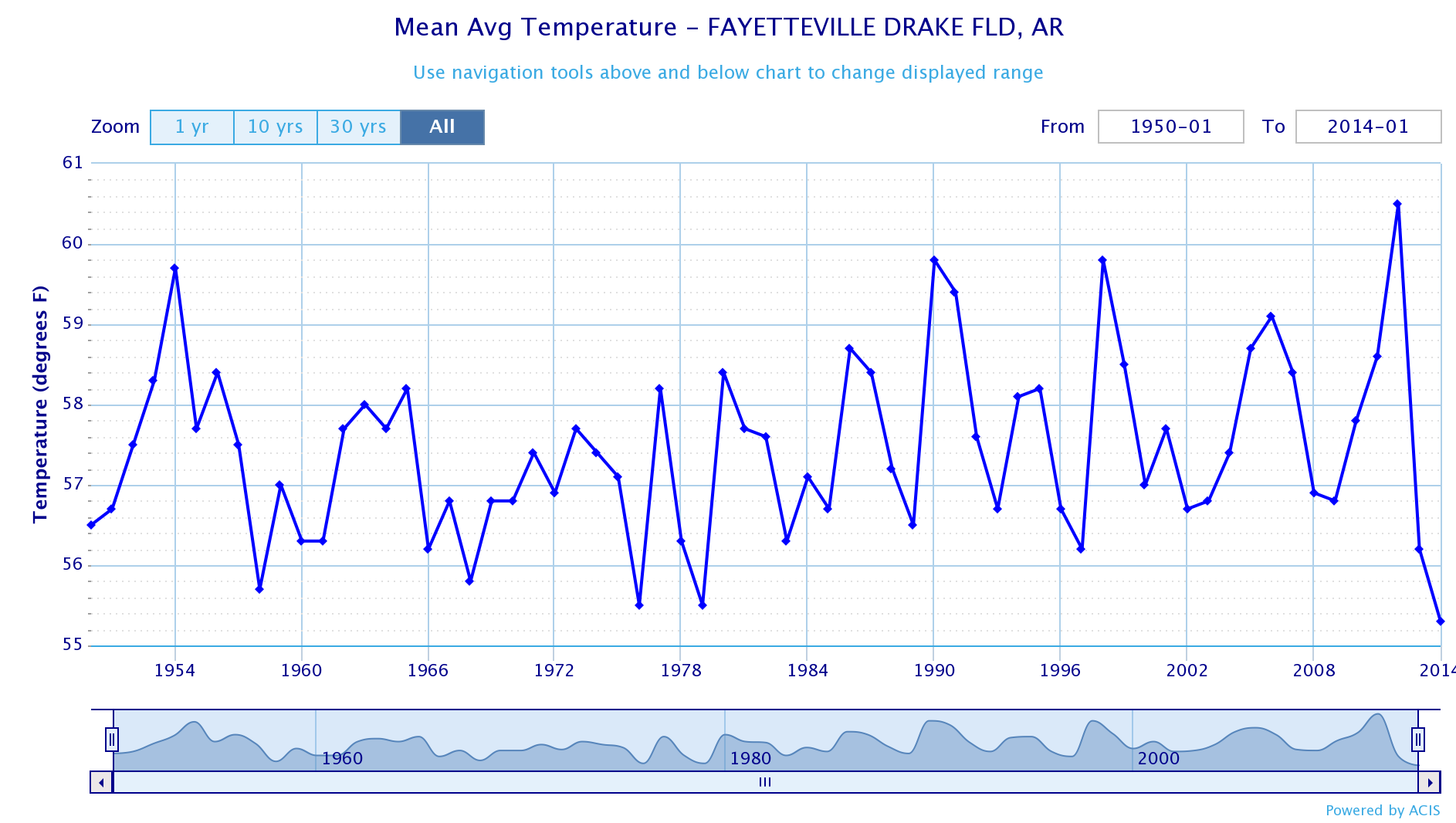
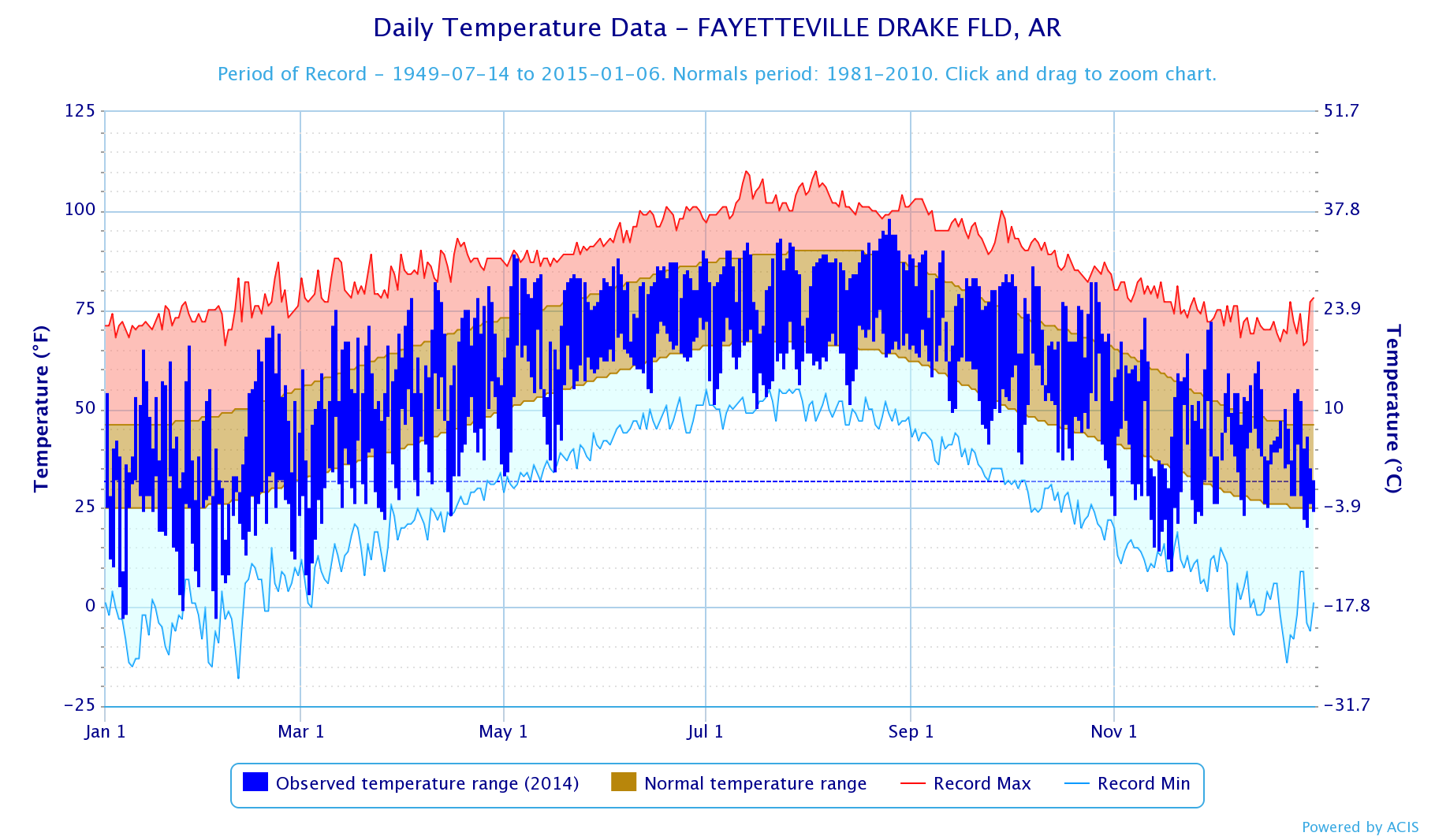
Annual temperatures are computed by adding up the monthly values and dividing by 12.


 Follow us on X
 Follow us on Facebook
 Follow us on YouTube
 TSA RSS Feed